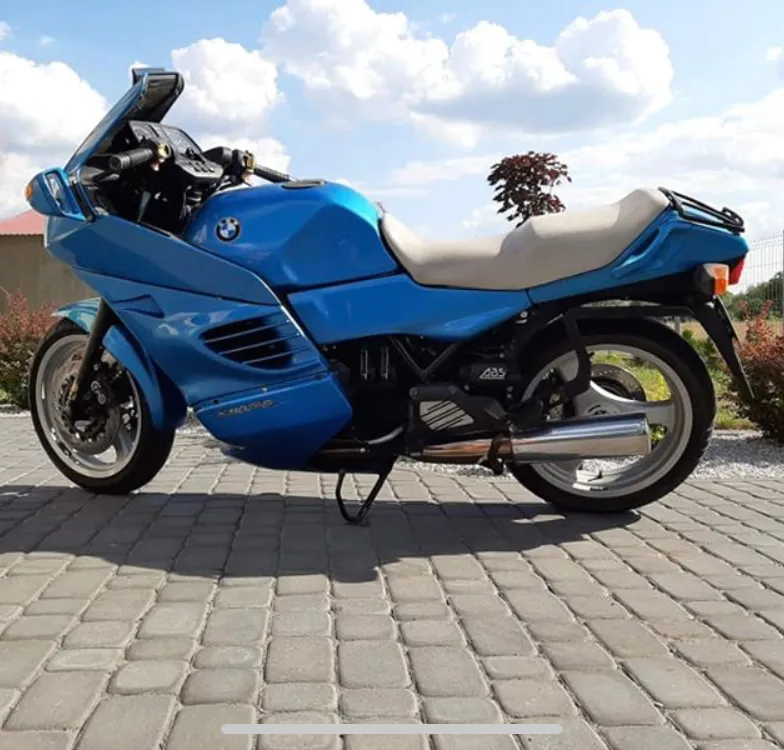
Nobody plans to start their first build with a full-dress sports tourer. In September 2019 I found a blue 1993 K1100 RS, all fairing and cream seat and ABS badges, running, with 4,200 zloty on the ad. I decided it was going to become a cafe racer. I had never built a bike before. I did not have a garage. I did not even live in the right city yet. None of that felt like a problem at the time, which is the correct amount of ignorance for a first build.
Workshop one: Lodz, two days a week
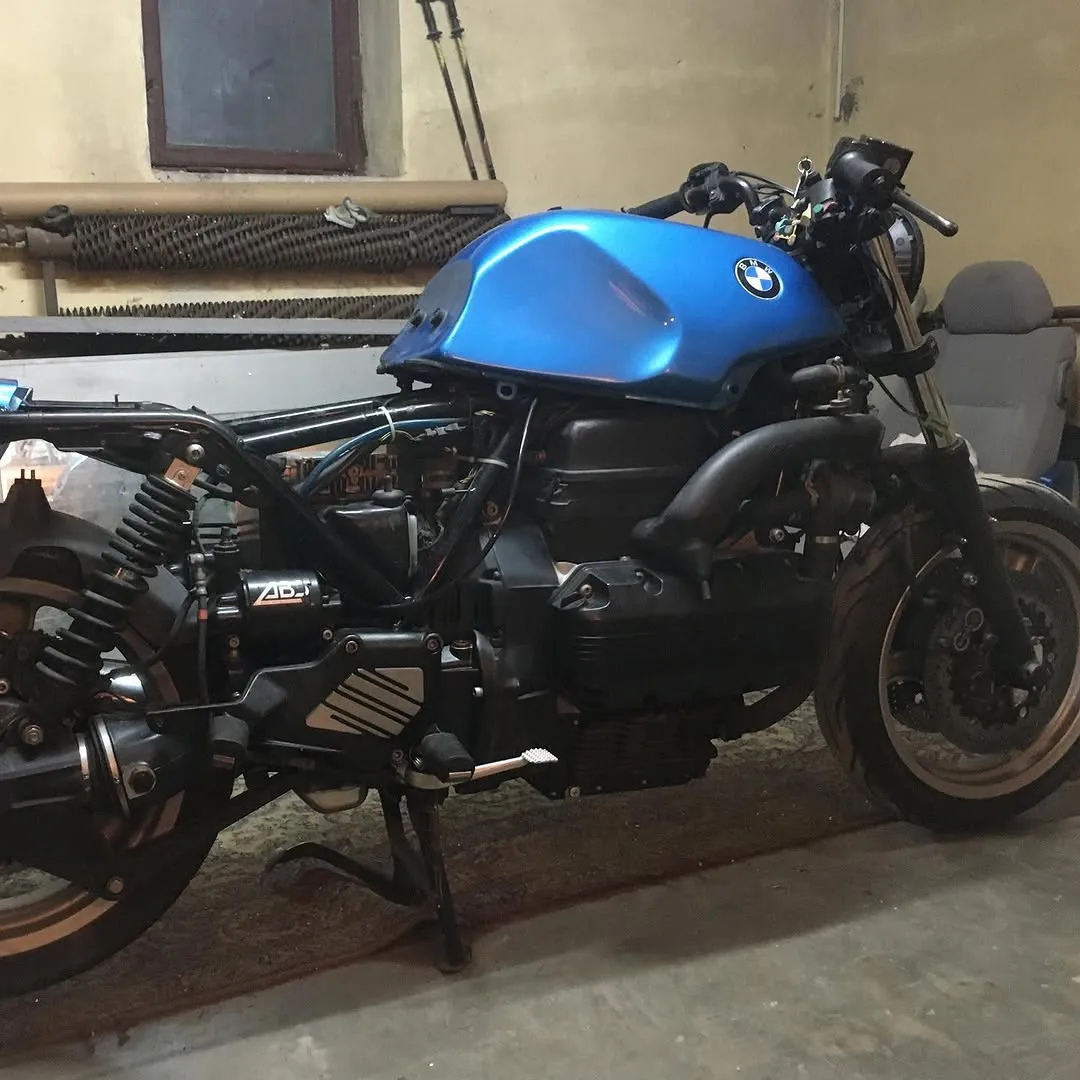
The build started in a rented garage in Lodz, a winter rental from a biker who turned out to be one of the nicest people this project met. Not a shop, not a business, just a guy with space and patience. I had the bike two days a week, and two days a week is a strange rhythm: you spend the first hour remembering where you stopped and the last hour photographing everything so next week hurts less.
This was the teardown phase. The fairing came off, the RS became a bare frame with an engine like a brick laid on its side, and the plan stopped being a picture on a phone and became a pile of labelled bags.
Workshop two: the in-laws
Then Covid hit and we moved in with my wife's parents, and the K1100 came along. Progress there was honest but small: cleaning, small parts, and research. Mostly research. This build ran on internet research and measuring, hours of both, and the lockdown months are where that habit set in. The folder of manuals and forum printouts grew faster than the bike did: the Clymer, the RS repair manual, a flow chart from the K100 forum titled Beginning When You Hit The Button, and long evenings inside bearing catalogues that would pay off later.
Workshop three: a pavement on Plac Bankowy
The move to Warsaw put us in a very small studio near Plac Bankowy, which is a polite way of saying the bike had no home and neither did the work. And this is where the seat story happens, because the seat is the part that nearly broke me.
A made-to-measure seat costs a fortune, and the fear of that invoice sent me down the DIY road. Attempt one: buy foam, shape it myself. Horrible. Attempt two: buy a used Honda seat, big enough, surely close enough. It did not fit the frame at all. Attempt three was the real one: make a proper base myself, in fiberglass, shaped to the bike, and build the foam and cover on top of that.
So one weekend the resin, the mat and the acetone came out, and the seat base of this bike was laminated outdoors, on the pavement, on Plac Bankowy, in the middle of Warsaw, with people walking their dogs around the fumes.
The city later put a no-parking sign on that exact spot. I take full credit.
The base came out well. With foam and a cover on top it looked far better than a first attempt has any right to, and the fear of the upholsterer turned out to be the best money I never spent.
Workshop four: Mokotow, five minutes from home
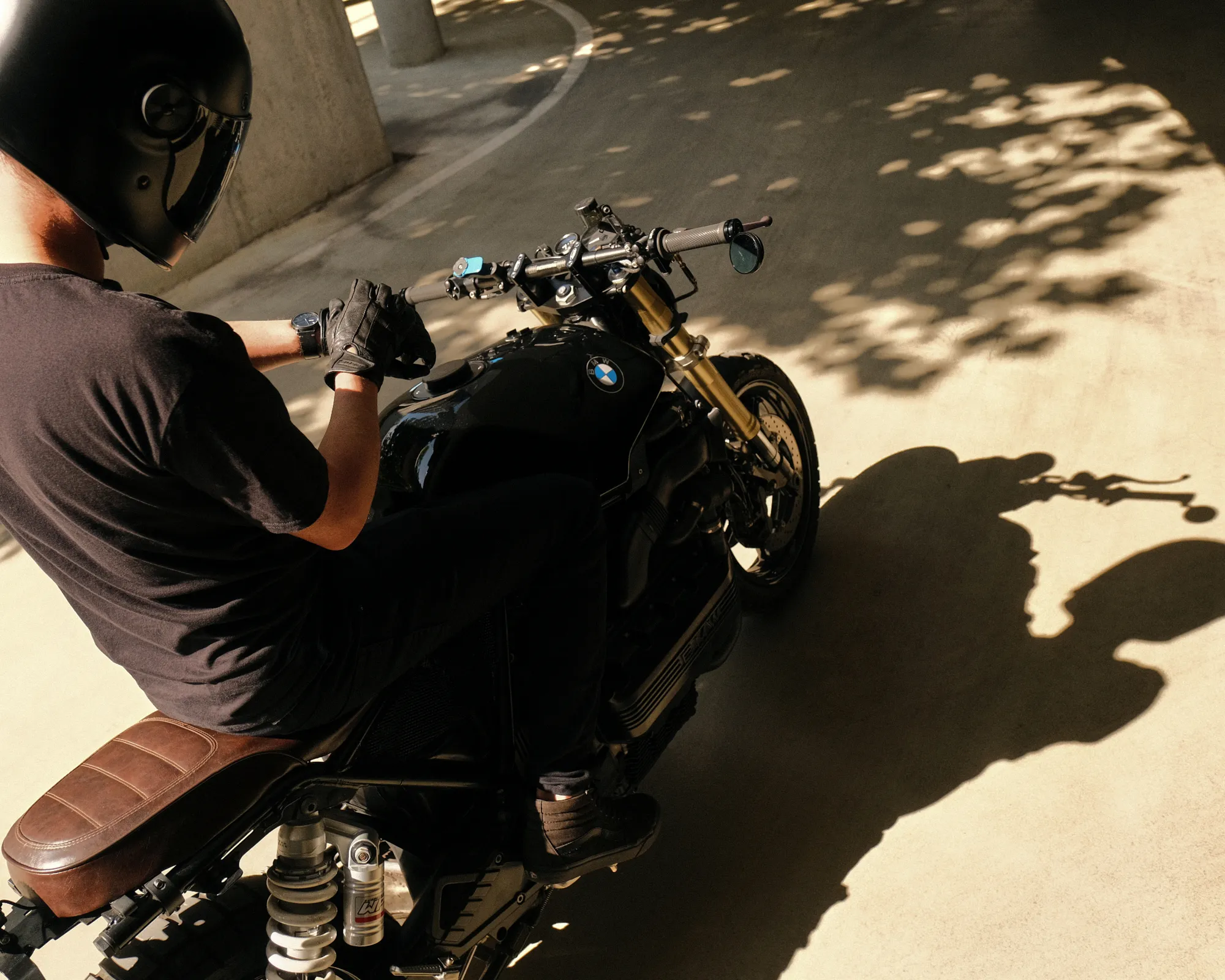
The build got finished for one boring reason: access. When we moved to Mokotow, my friend Kuba and I found a garage five minutes from my flat, and suddenly an hour of free time meant an hour of work instead of an hour of logistics. Every serious job on this bike happened in that garage. If there is one lesson in this whole story it is that access beats talent: the closer the bike is, the faster it gets finished.
The front end, or: how a DRZ400 saved the project
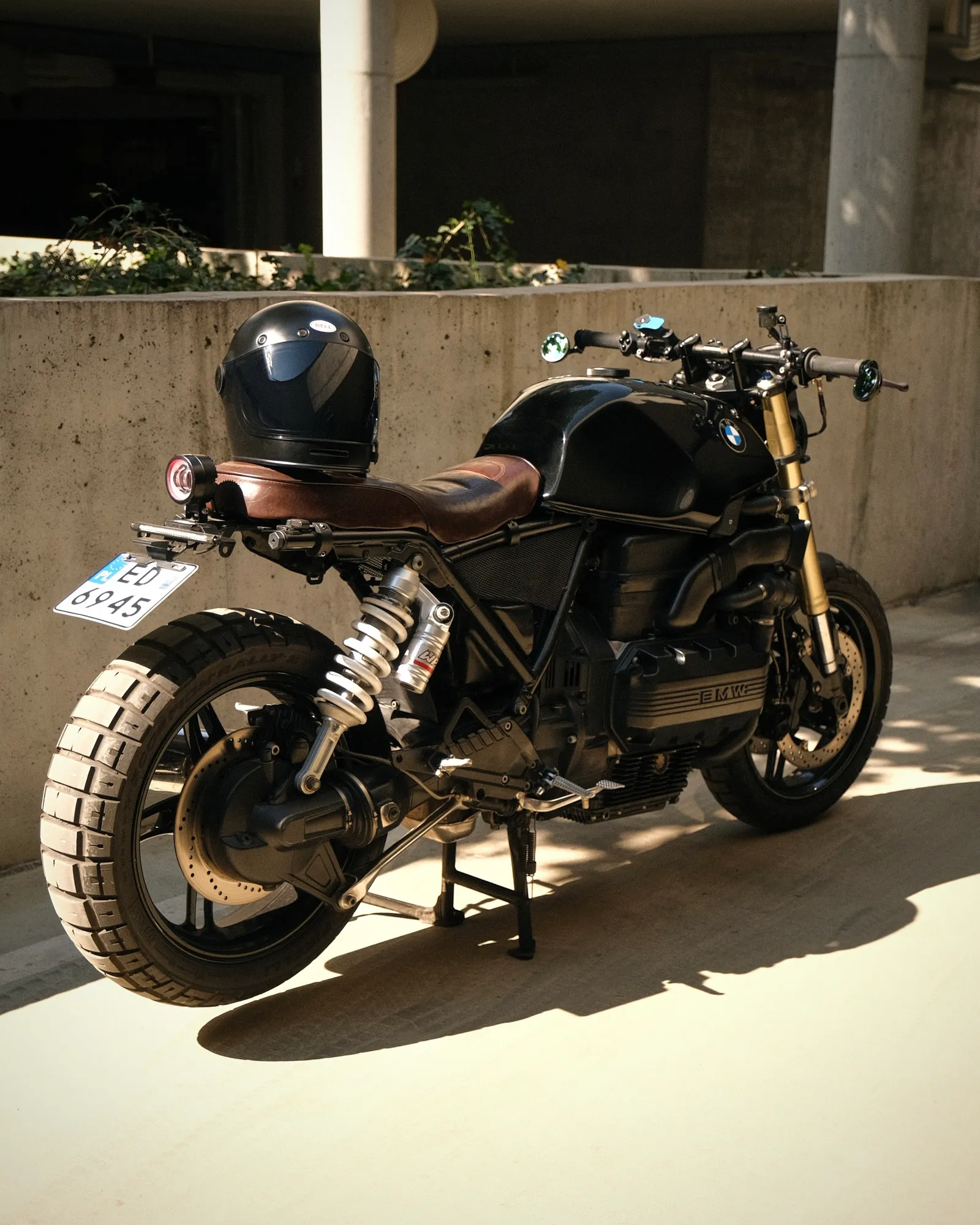
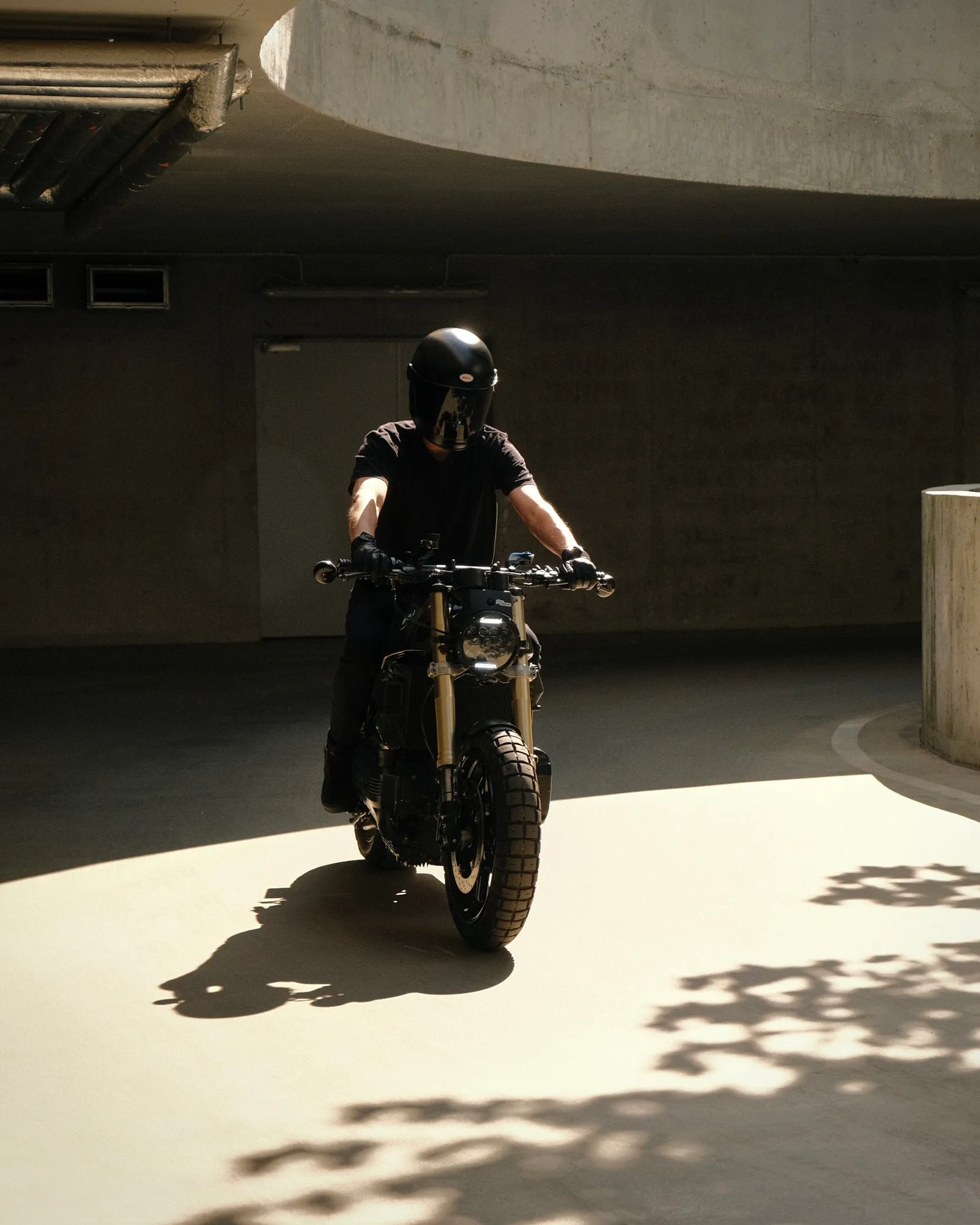
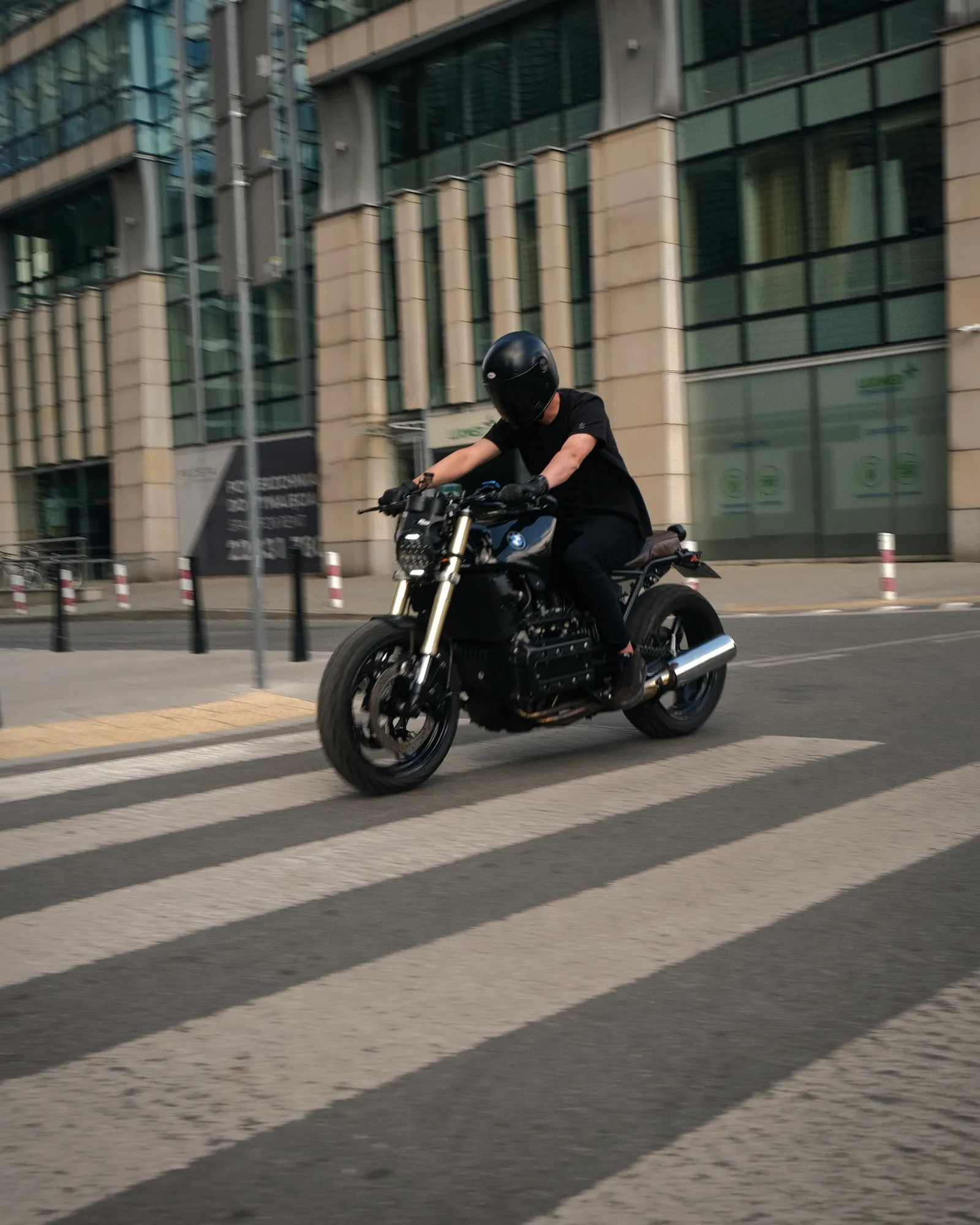
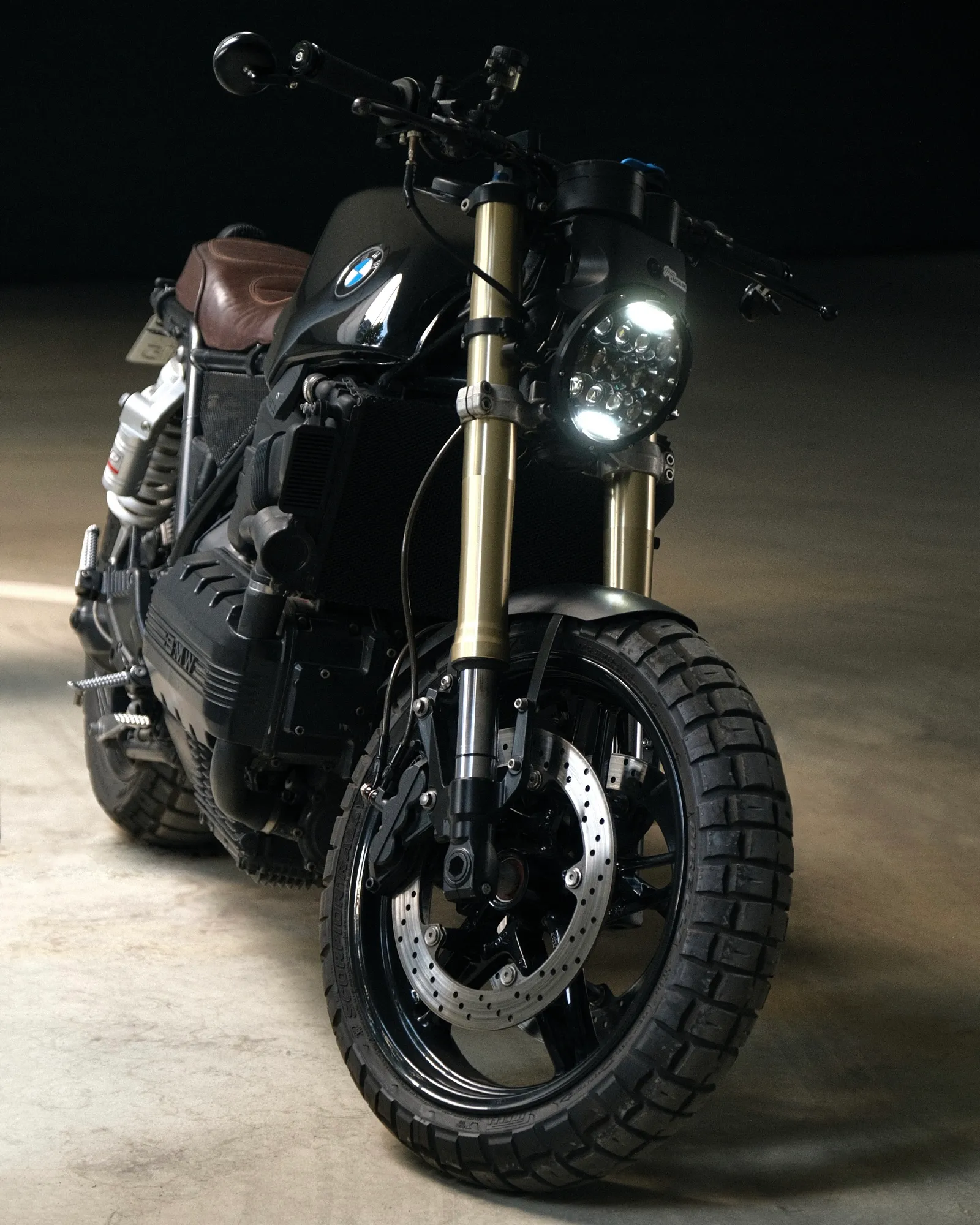
The biggest job was the fork conversion. The K1100 front end is heavy and vague and had to go, and a complete Yamaha R1 front end, triples, upside-down forks with the gold stanchions that now define the bike, was the target. The problem with putting an R1 front end in a BMW frame is the steering head: nothing matches, and the usual answer is machining custom races.
The answer that costs nothing is the All Balls bearing catalogue. Cross-reference long enough and you find a bearing that matches the BMW head tube on the outside and the Yamaha stem on the inside. A DRZ400 steering bearing did the trick. Straight in, no machinist involved. Weeks of measuring, one part number, done.
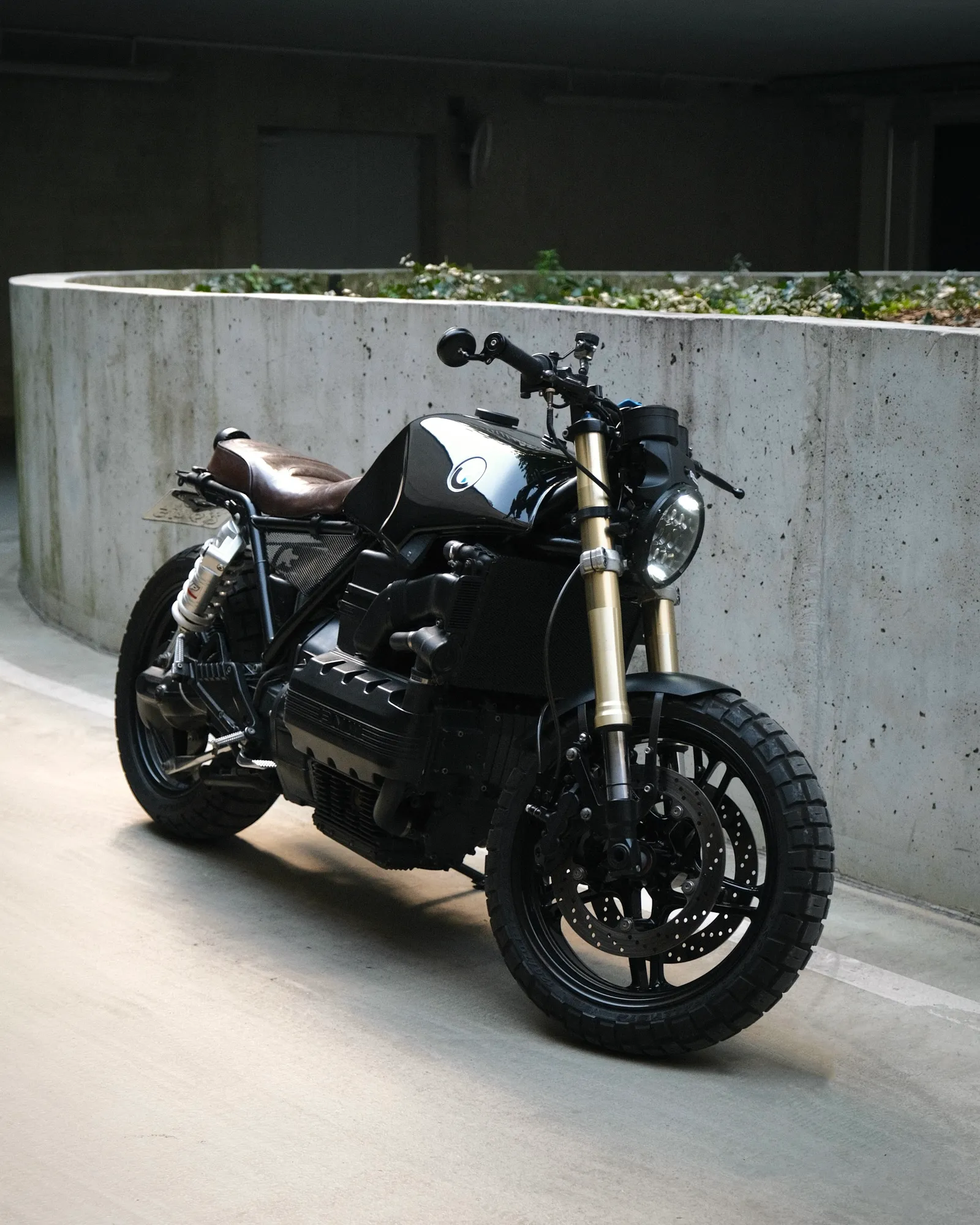
The brakes are the part I am proudest of on the whole bike: six-piston calipers from a Yamaha YZF750, a properly old bike, running R1 pads. The wheels came from a K1200RS, which meant shimming the discs and making spacers until everything sat true. The front mudguard is a Triumph part, and mounting it to forks it was never meant for was my own small fabrication victory. The rear shock is from a KTM Super Duke, chosen the same way as everything else: research, measuring, more measuring.
The frame I never cut
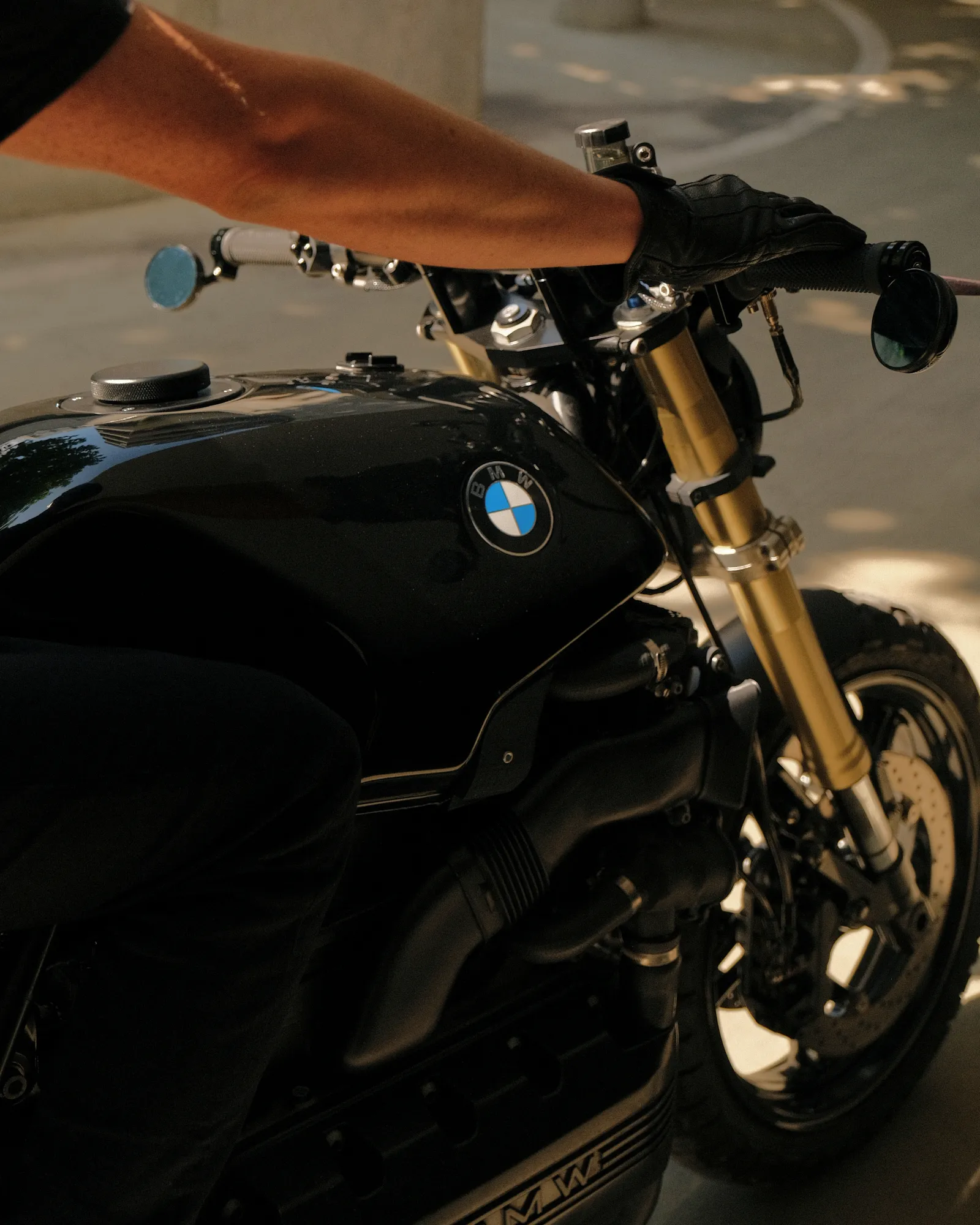
Every build thread tells you to cut the subframe and loop it. I could not do it. Fear, mostly, and some respect: cutting a frame on your first build is a one-way door, and I was not ready to walk through it. So the frame is completely stock, every line of the bike negotiated with the lines BMW drew in 1993 instead of drawn from scratch. It made the seat and tail harder. It also means the bike can go back to standard, and I sleep fine.
Electrics: m-unit style, without the m-unit price
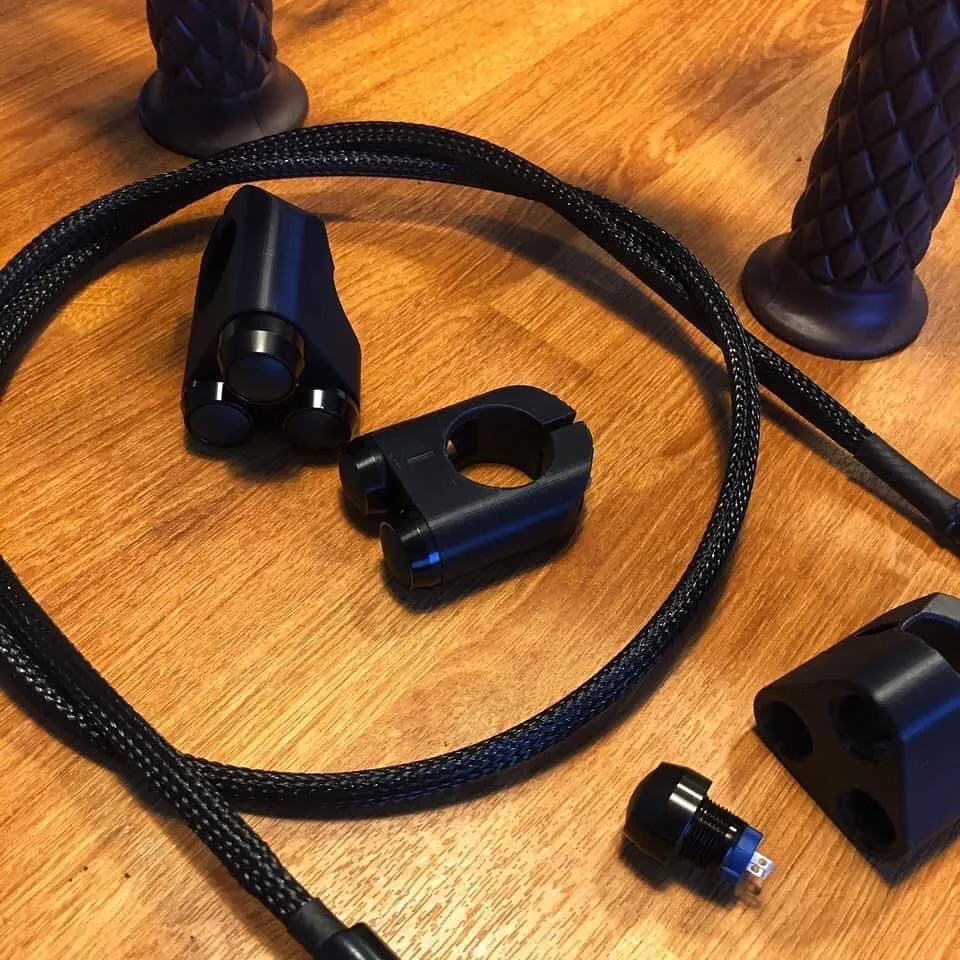
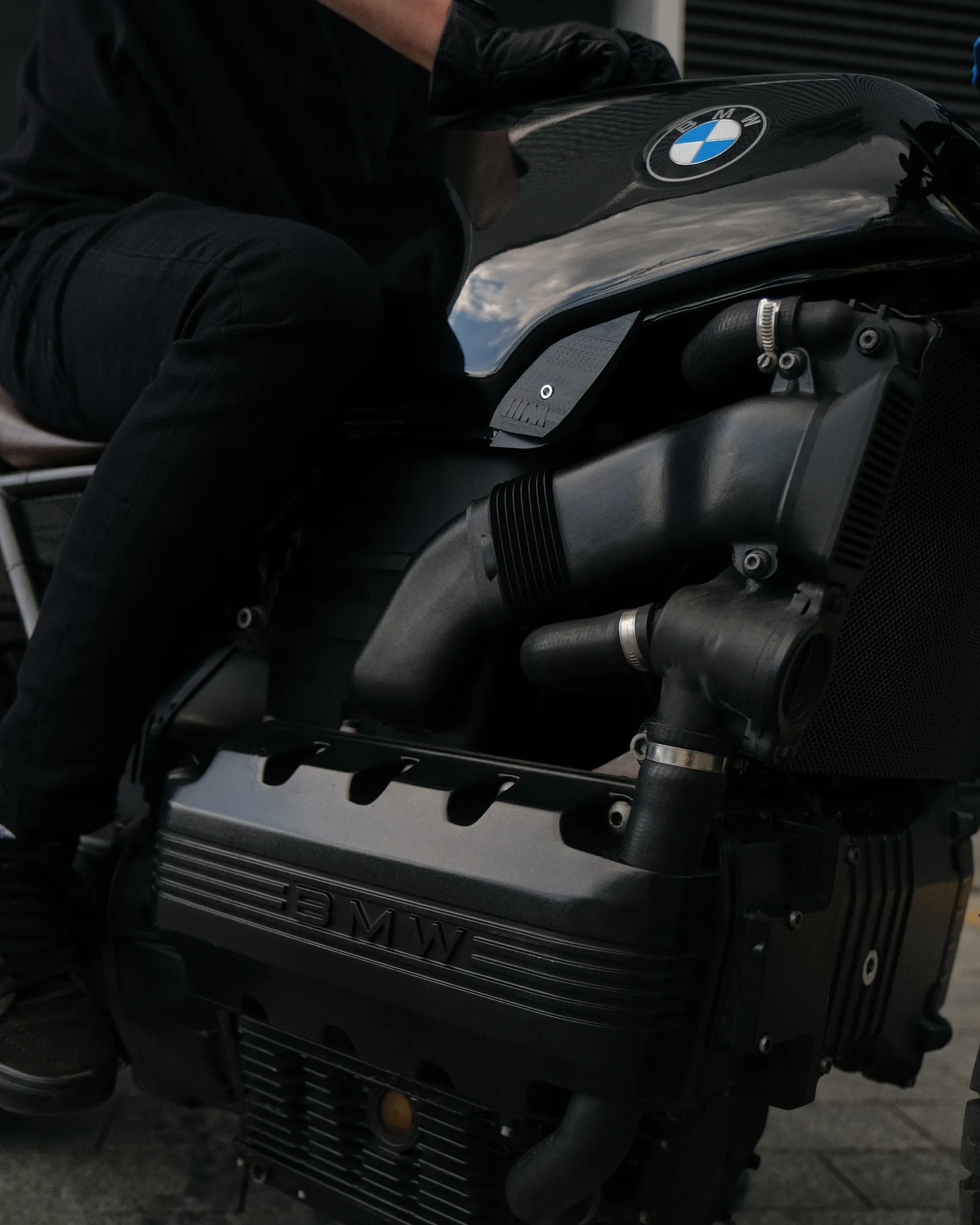
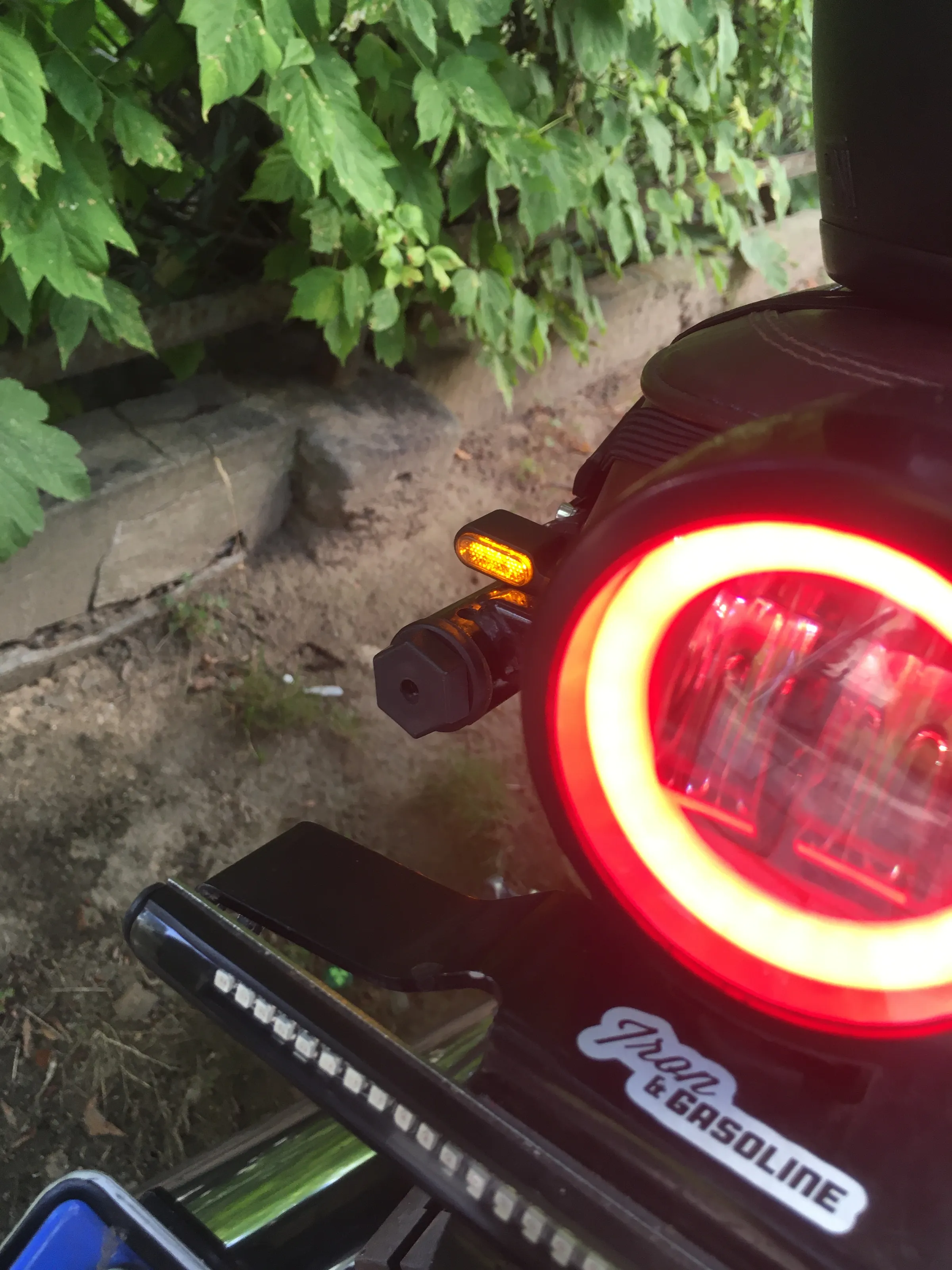
The wiring is push-button, Motogadget m-unit style, but built without the Motogadget invoice: an ordinary flasher relay and careful planning do most of what the expensive box does. The handlebar buttons themselves are 3D printed, modelled by me, like a surprising amount of this bike: the headlight bracket, the tank side covers, an intake vent piece, and the rear mudguard, printed and then covered in carbon. Five years ago that would have meant a fabricator and a bill; now it means an evening of CAD and a spool of filament.
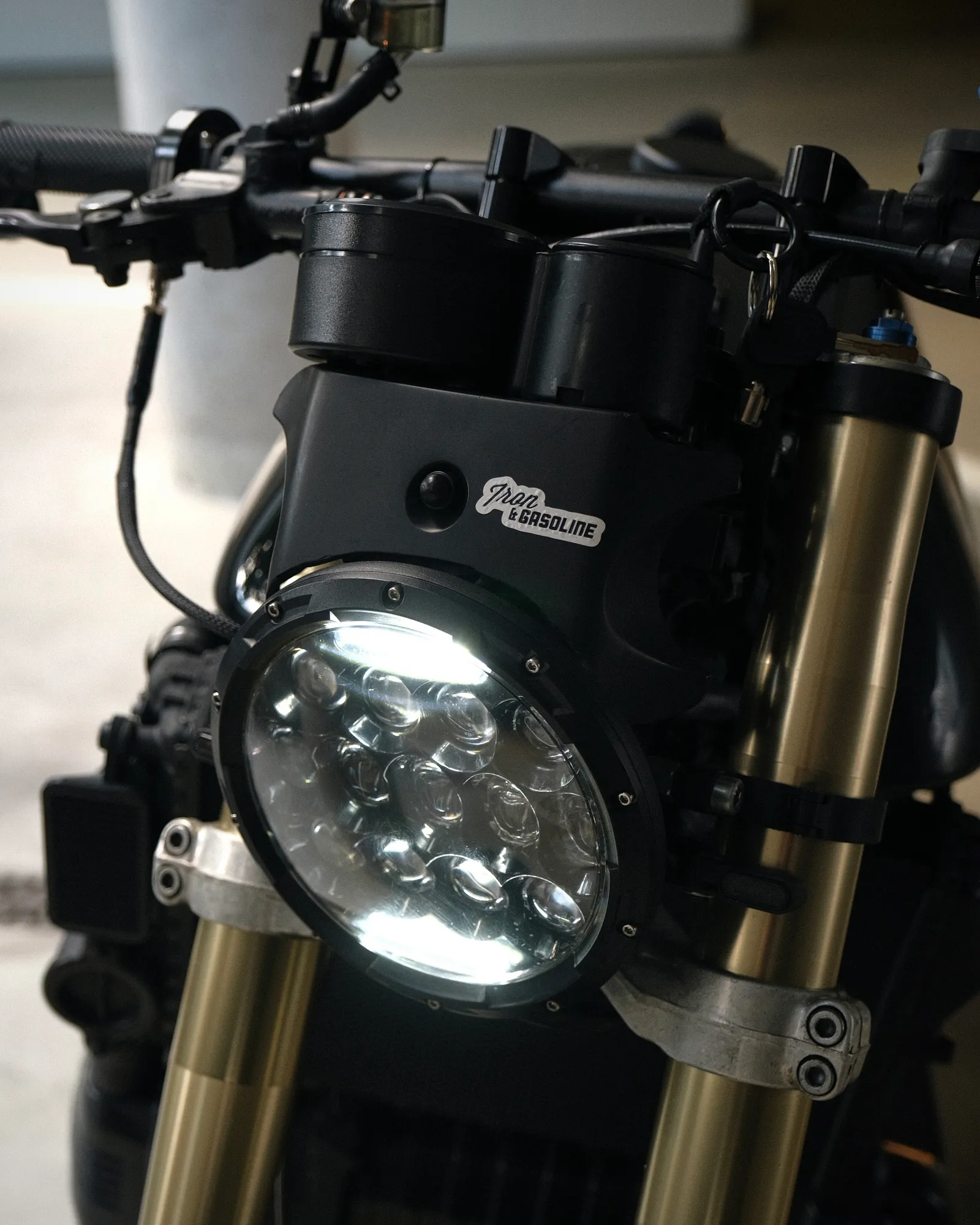
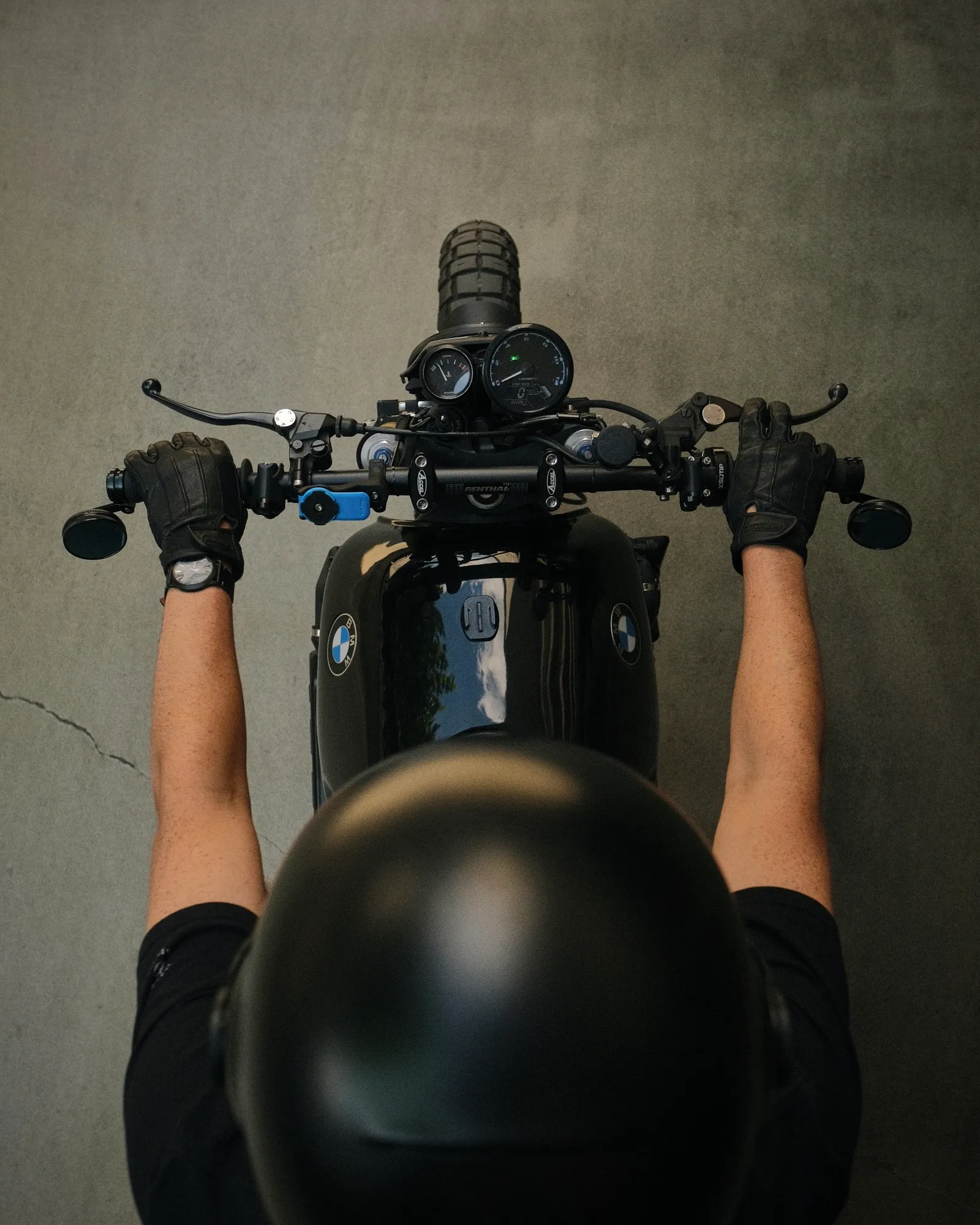
The dash is a Tenet pack with the speedo already wired in, plug and play, an absolute lifesaver on a fuel-injected bike where the loom is not something you improvise. The Tenet harness stays even if the display changes one day.
The numbers
Every zloty went into a spreadsheet as it was spent, which is how I know this education cost exactly 13,732 zloty, about 3,000 euro, donor included, spread over five years. Not scrap-money cheap, not magazine-build money either. The build sheet below is the honest version; the spreadsheet it comes from is longer and slightly embarrassing.
Next in the garage
The K1100 is done, which by garage law means it is time to be wrong about how long the next one will take. There is a Yamaha XV750 waiting, and that story starts soon.
The build sheet
| Donor | 1993 BMW K1100 RS, blue, running | 4,200 zl |
|---|---|---|
| Front end | Yamaha R1 triples and USD forks, DRZ400 headstock bearing | 1,169 zl |
| Front brakes | YZF750 six-piston calipers, R1 pads | 367 zl |
| Wheels | K1200RS front and rear, discs shimmed, custom spacers, bearings | 1,068 zl |
| Rear shock | KTM Super Duke | 330 zl |
| Gauges | Tenet pack with pre-wired speedo | 1,030 zl |
| Seat | Three attempts, DIY fiberglass base, foam and cover | 373 zl |
| Fuel system | K1200 injection rail, R1150 pressure valve, injector kit | 315 zl |
| Paint | Tank and wheels | 475 zl |
| Tyres | Pirelli, both ends | 615 zl |
| Headlight | Jeep Wrangler LED | 100 zl |
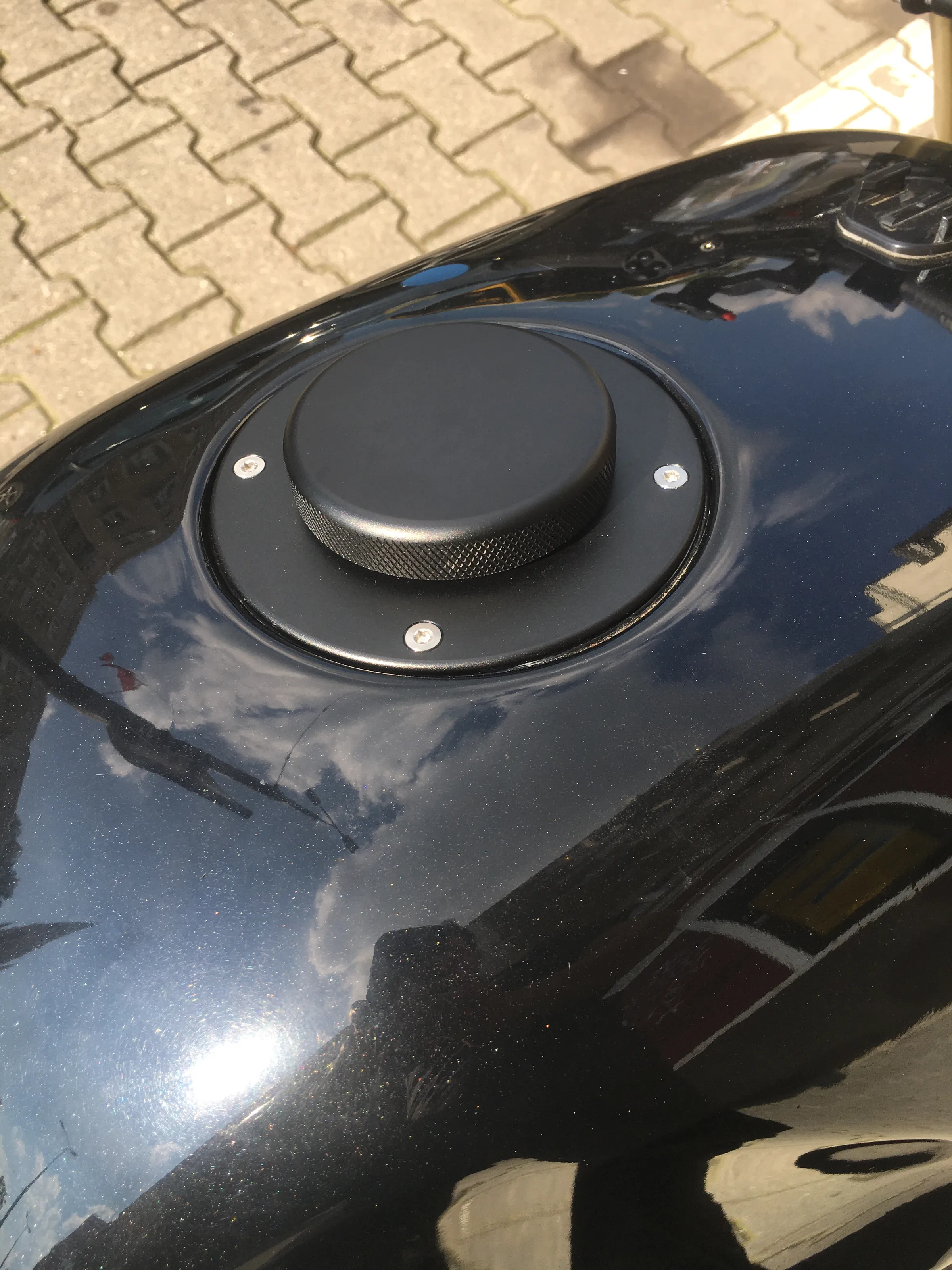
| CNC parts | Tank cap, mirrors, risers | 513 zl |
| Electrics | Push-button controls, flasher relay, LED lighting, printed buttons | 460 zl |
| Total | Everything, including all the small stuff not listed here | 13,732 zl |
Common questions
Is a BMW K1100 a good donor for a first custom build?
Yes, with one warning: everything is bigger and heavier than on a K75 or K100. The engine is effectively unkillable, the electrics are honest, and the RS versions are cheap because nobody wants the fairing. Mine cost 4,200 zloty running, and five years later the engine has never been the problem.
What forks fit a BMW K1100 cafe racer conversion?
I used a complete Yamaha R1 front end: triple clamps, upside-down forks, brakes. The trick is the steering head: cross-reference bearing dimensions in the All Balls catalogue until you find one that matches the BMW frame on the outside and the Yamaha stem on the inside. A DRZ400 steering bearing was the match. No machining needed.
Do you have to cut the frame on a K1100 build?
No, and mine is proof: the frame is still completely stock. It costs you some freedom, because you have to work with the lines BMW gave you instead of drawing your own, but the bike stays reversible and you never take a grinder to a structural part on your first build.
How much does a custom BMW K1100 build cost?
Mine came to 13,732 zloty all in, about 3,000 euro, spread over five years and tracked line by line in a spreadsheet. That includes the 4,200 zloty donor, an R1 front end, K1200RS wheels, a KTM shock, Tenet gauges and every bolt and brake line along the way. The full build sheet is on this page.
Where can I see more of this build?
The full photo set for every build is on Instagram at @ironandgasolineofficial, and questions get answered there.
Got a question about this build, or built one yourself? The conversation happens on Instagram — the full photo set for this bike is up there, and I answer everything in the comments.
Join the thread on Instagram